Executive View
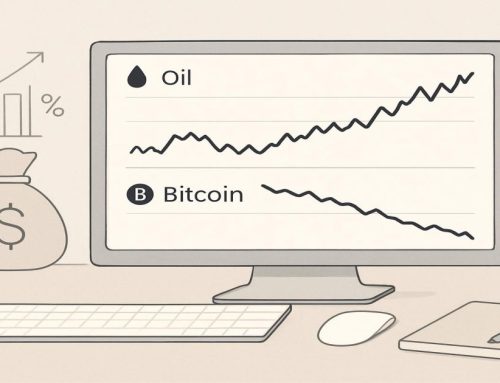
The real driver is not the headline move in crude itself, but a sudden repricing of physical supply security across the global oil system. When markets start to price disruption risk in the Strait of Hormuz, the premium shifts from broad benchmark exposure to barrels that are more immediately accessible outside the chokepoint. That is why the move matters: this is an inflation shock first, with oil as the transmission channel and cross-asset repricing as the consequence.
What Changed Today
Today’s meaningful development was the market’s reassessment of whether Gulf-linked crude flows can move normally if Hormuz disruption risk rises. That matters because the Strait is not just a geopolitical headline; it is a core artery for seaborne oil. Once traders begin to question uninterrupted passage, benchmark relationships can change quickly, freight assumptions are repriced, refinery sourcing models adjust, and prompt barrels outside the threatened route can command a relative premium.
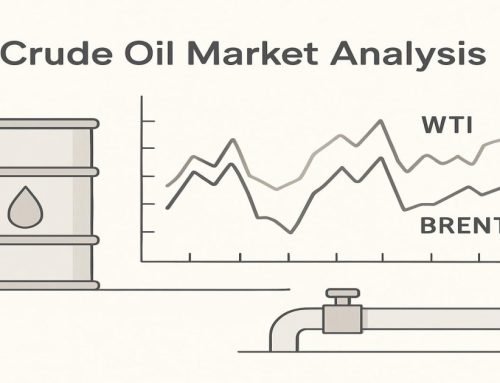
The notable market implication is that WTI outperformed to the point of flipping Brent. For macro traders, that is more important than the absolute daily move. A benchmark inversion of this type signals that the market is no longer trading only demand expectations or generic risk premium; it is trading regional availability, transport security, and near-term deliverability.
- Whether the WTI-Brent relationship holds or quickly normalizes
- Any evidence of actual shipping disruption versus precautionary repricing
- Refinery response: substitution into Atlantic Basin or US-linked grades
- Broader market reaction in inflation-sensitive assets, not oil alone
Market Regime
Current regime: Inflation shock.
Dominant driver: Oil.
This is not primarily a growth scare yet, because the first-order move is not about collapsing demand. It is not a liquidity regime either, because the market reaction is being led by commodity scarcity pricing rather than funding stress. And while risk-off behavior can emerge second, the dominant force remains an energy-led inflation impulse: higher crude raises the market’s estimate of future input costs, transport costs, and headline inflation risk.
In this regime, traders should think in hierarchy. The first question is whether crude is repricing because of supply access. The second is whether that crude shock feeds into inflation expectations and rates. The third is whether tighter financial conditions then pressure equities and cyclical assets. If Hormuz risk remains central, oil stays the lead variable.
Market Transmission
The clean macro chain is as follows:
- Potential Strait of Hormuz disruption raises concern over the movement of Gulf crude and refined products.
- Physical supply uncertainty increases the premium on barrels seen as easier to source and deliver outside the chokepoint.
- WTI outperformance versus Brent reflects a repricing of relative accessibility, not just a generic bullish oil view.
- Higher crude lifts the market’s inflation sensitivity, especially through fuel, freight, petrochemicals, and industrial input channels.
- Inflation repricing can then pressure rate expectations, particularly if markets judge the shock as persistent rather than brief.
- Tighter rate and inflation conditions weigh on duration-sensitive equities, margin-sensitive sectors, and import-dependent economies.
The mistake is to stop at “oil up, risk-off.” The real issue is whether the oil move changes the expected policy and inflation path. If the answer is yes, then this becomes a broader macro event rather than a commodity-specific spike. If the answer is no, the move can remain concentrated in energy, freight, and near-term inflation hedges.
For beginners, one useful framework is to separate price shock from macro shock. A price shock is a fast move in crude that mostly stays within energy markets. A macro shock is when oil strength begins to alter inflation expectations, bond market pricing, and equity leadership. Today’s structure points toward the second risk, even if confirmation is still developing.
The Retail Trap
Retail traders usually get this type of session wrong in three ways.
- They chase the headline candle. A large move invites emotional momentum buying after the repricing has already happened. In event-driven oil markets, late entries often come just as professionals start reducing tactical risk.
- They trade absolute direction but ignore benchmark structure. The key information today is not simply that crude rallied; it is that relative pricing changed. When WTI flips Brent, the market is saying something more specific about flows and availability. Traders who ignore that structure miss the real signal.
- They assume geopolitics automatically means a lasting trend. Markets can price disruption risk well before actual disruption occurs. If no sustained impairment to flows appears, part of the premium can fade quickly.
Why do they lose money here? Because they treat a supply-security event like a normal breakout. But this is not a clean technical trend environment. It is a headline-sensitive repricing process where liquidity can thin, reversals can be violent, and the best edge often comes from waiting for confirmation in spreads, freight-sensitive names, inflation assets, and rates.
Beginner Rules
- Do not trade the first impulse if the move is driven by geopolitical headlines and you do not have a clear event framework.
- Do not trade because oil is “up a lot.” Trade only if you can explain why the move should persist through the next session or two.
- Look for confirmation in related markets: persistent strength in energy equities, inflation-sensitive positioning, and sustained benchmark dislocation matter more than one sharp candle.
- Do not short simply because the move looks overstretched. In supply-risk events, “overbought” can stay overbought longer than expected.
- Stand aside when the market is pricing headlines faster than facts. If there is no clarity on actual shipping impact, non-participation is a valid decision.
- Confirmation looks like follow-through in the WTI-Brent relationship, continued focus on deliverable non-Hormuz barrels, and broader inflation-sensitive market response rather than isolated oil volatility.
Traders who need a structured process can review more macro trade frameworks on the CRT-SEM blog.
What to Watch Next
- Official or market-based signs of actual shipping disruption, rerouting, or insurance/freight stress tied to Hormuz traffic
- Whether the WTI-Brent inversion persists or rapidly normalizes once the initial shock is digested
- Evidence that the move is becoming a broader inflation repricing through rates and inflation-sensitive sectors
- Refinery and physical market response, especially signs of substitution toward US-linked or Atlantic Basin barrels
- Any policy or diplomatic development that materially lowers or raises the probability of prolonged disruption
Conclusion
The dominant driver is clear: this is an oil-led inflation shock triggered by a sudden repricing of supply security through the Strait of Hormuz. The key signal is not just higher crude, but a benchmark relationship that suggests oil flows are being reassessed in real time. For traders, the edge now lies in tracking whether this remains a localized oil premium or becomes a broader inflation and cross-asset regime shift.
For ongoing macro setups and trade filters, see the CRT-SEM signals page.