Executive View
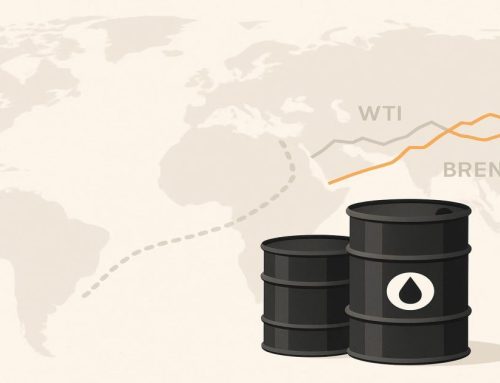
The dominant driver is not the headline itself but the oil-driven inflation shock now being re-priced into the curve. Strait of Hormuz risk matters because it threatens the transport channel, not just spot supply, and that lifts the geopolitical premium embedded in crude. As that premium rises, WTI can narrow its discount to Brent because the market shifts from a local North American balance story to a broader global disruption framework.
What Changed Today
The meaningful change was a renewed focus on Hormuz-related disruption risk, which matters far more than routine supply headlines because a shipping chokepoint changes how traders price global crude availability. Brent usually carries the larger geopolitical premium because it is the seaborne international benchmark, but when the market starts treating disruption risk as broad enough to tighten Atlantic Basin and inland balances as well, WTI can catch up relative to Brent.
That relative move is important for traders because it signals a shift in market logic: from simple regional spreads to a global inflation transmission. In other words, this is not just an oil story. It is a cross-asset repricing of inflation sensitivity, growth risk, and policy expectations.
Market Regime
Current regime: Inflation shock.
Dominant driver: Oil.
This regime is defined by a sudden rise in energy-related pricing pressure that forces markets to reassess inflation persistence before any hard economic slowdown is fully visible in the data. In an inflation shock regime, oil does not move in isolation. It pushes into inflation expectations, complicates central bank reaction functions, and can tighten financial conditions even before policymakers act.
That is the key distinction from a pure risk-off regime. In risk-off, assets usually move because investors want safety. In the current setup, the primary impulse comes from higher energy costs, and only then does it bleed into broader risk sentiment. The market is first asking whether energy inflation will be more persistent; only after that does it ask how equities, bonds, and FX should adjust.
Key levels / triggers
- Watch whether WTI continues to outperform Brent on a relative basis rather than just both benchmarks rising together.
- Monitor whether the move is confirmed by shipping-risk headlines and broader energy complex strength.
- Track whether bond markets begin pricing stickier inflation rather than treating oil as a one-day headline spike.
- Look for USD reaction: broad dollar strength would signal tightening financial conditions, not just commodity volatility.
Market Transmission
The clean macro chain is:
Hormuz disruption risk -> higher transport and supply uncertainty -> larger crude risk premium -> higher inflation expectations -> tighter expected policy path / firmer yields and USD -> pressure on risk assets and demand-sensitive sectors.
Each link matters.
1) Hormuz risk lifts the premium, not just the spot price
When a chokepoint becomes central to market thinking, traders are no longer valuing crude only on current barrels produced. They are pricing the reliability of delivery. That distinction is why geopolitical moves can be abrupt: the market is repricing the probability distribution of future supply, not waiting for a confirmed outage.
2) A higher oil premium feeds inflation expectations
Oil is one of the fastest macro variables to transmit into inflation psychology. Even before official data reflect it, markets begin pricing the possibility that headline inflation stays firmer for longer. That matters because central banks are far more sensitive to renewed energy-led inflation when policy already sits in restrictive territory.
3) Inflation repricing changes rates and FX
If markets think energy will keep inflation sticky, the expected path of easing can be pushed back. That tends to support front-end yields and can support the US dollar, especially when global growth is already uneven. The FX implication is important: a stronger dollar can tighten global financial conditions and create a second-round drag on risk sentiment.
4) Cross-asset pressure follows
Equities then face a double hit: higher input costs and tighter discount-rate conditions. Sectors tied to consumer resilience and transport costs become more exposed. Meanwhile, crude-related assets may benefit initially, but only if the market still believes the inflation impulse dominates any later demand destruction story.
This is why WTI narrowing the gap with Brent matters. It tells you the market is not treating the move as a narrow regional event. It is treating it as a broader inflation and logistics shock.
The Retail Trap
Retail traders usually make two mistakes here.
First, they trade the headline instead of the transmission. They see “Hormuz risk” and buy oil after the first impulse move without asking whether the market is repricing short-lived fear or persistent inflation risk. That often leads to poor entries after the premium is already partially priced.
Second, they look at Brent and WTI as if they should always move in parallel. They do not. The spread carries information. When WTI narrows the gap with Brent, the market may be signaling that disruption risk is broad enough to alter global balances, refinery economics, inventory assumptions, or transport premia beyond the seaborne benchmark alone.
Why do retail traders lose money here? Because they chase the obvious chart and ignore confirmation from rates, the dollar, and the broader energy complex. In an inflation shock regime, a crude rally without confirmation from inflation-sensitive assets is less reliable than it looks.
Beginner Rules
- Do not trade the first headline alone. Wait to see whether the move is sustained through the next major market session and whether related energy contracts confirm it.
- Do not trade if the move is purely emotional and immediately reverses. A fast spike followed by a weak close often means positioning stress, not durable macro repricing.
- Use relative confirmation. If WTI is narrowing versus Brent and the broader energy complex is firm, the signal is stronger than a standalone crude bounce.
- Check cross-asset alignment. Confirmation looks like inflation-sensitive yields holding firm and the USD staying supported rather than fading quickly.
- Do not force trend trades into major policy-event risk. If central bank communication or a major inflation release is imminent, oil can be subordinated temporarily to rates pricing.
- Prefer pullbacks over vertical extensions. In geopolitical markets, chasing breakout candles after the first premium expansion usually offers poor risk control.
What to Watch Next
- Any escalation tied directly to shipping through Hormuz, not just broad regional rhetoric.
- Brent-WTI spread behavior: continued narrowing would confirm a broader disruption framework.
- Inflation-sensitive rates reaction: markets pricing delayed easing would reinforce the inflation shock regime.
- USD follow-through: a firmer dollar would signal tighter global financial conditions.
- Official inventory, shipping, or export flow disruptions: these would convert risk premium into a more fundamental supply story.
Conclusion
The market is operating in an inflation shock regime, with oil as the dominant driver. WTI narrowing the gap with Brent is not just a spread story; it is evidence that traders are pricing a wider global disruption and inflation transmission, not a local supply issue.
For traders, the key is to follow the macro chain rather than the headline spike. For more structured trade frameworks, see the CRT-SEM blog and the CRT-SEM signals page.