During war escalation, beginners often assume:
-
Oil goes up → therefore gold must go up → therefore “buy gold now.”
Sometimes that works. Often it doesn’t — because war markets produce spikes, reversals, and traps.
This guide explains (in simple terms):
-
Why oil and gold (XAUUSD) react differently to war
-
When they can move together and when they diverge
-
A beginner “survival rulebook” for aggressive volatility
What’s happening now (context in 2026)
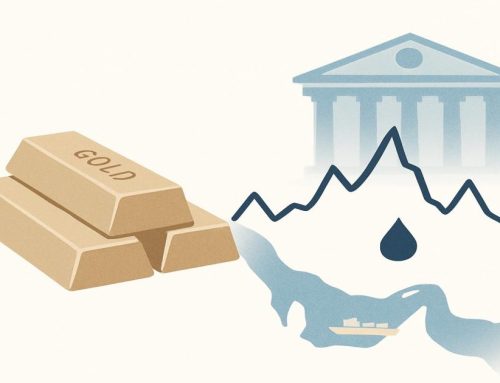
Recent reporting describes oil jumping roughly 10% after U.S. and Israeli strikes on Iran, with heavy market focus on risks around the Strait of Hormuz, a critical energy chokepoint.
When markets fear energy supply disruption, oil can surge quickly — and that can ripple into inflation expectations, interest-rate pricing, and risk sentiment.
1) Gold vs Oil: the simplest explanation for beginners
Oil is “supply risk + growth risk”
Oil reacts to:
-
supply disruptions (shipping routes, facilities, sanctions)
-
demand outlook (global growth)
-
inventories and OPEC+ policy
War can create a supply shock narrative (less oil available), which can push prices sharply higher.
Gold is “fear + rates + dollar”
Gold reacts to:
-
risk-off demand (“safe haven” behavior)
-
real yields / rate expectations
-
USD moves
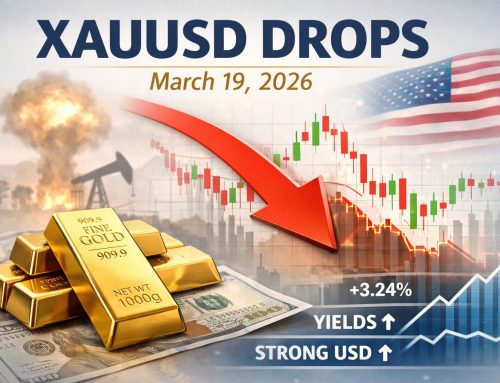
Gold is often treated as a safe-haven asset during crises, but it can still drop intraday if the dollar spikes or if traders unwind leverage.
Beginner takeaway:
Oil is about energy supply/demand. Gold is about fear + money conditions (USD/rates).
2) When gold and oil move together (and why)
They can rise together when war creates:
-
Supply shock in oil → inflation expectations rise
-
Inflation concerns + uncertainty → investors hedge with gold
This is a common “war shock” mix: oil up, gold bid, stocks shaky.
3) When gold and oil diverge (the trap beginners miss)
They diverge when the USD and rates dominate.
Example divergence
-
Oil spikes on supply fear
-
Market prices higher inflation → higher rates
-
USD strengthens → gold struggles or whipsaws
Also, correlations can become unstable in fear-driven markets; oil and gold don’t reliably “track” each other candle-by-candle.
Beginner rule:
Do not trade gold based only on oil direction. Trade gold based on gold structure + volatility rules.
4) The 6 beginner risks in aggressive war volatility (XAUUSD)
This is where accounts get hurt:
-
Spread widening (your entry/exit gets worse)
-
Slippage (stops can fill beyond your level in spikes)
-
Headline whipsaw (up on one update, down on the next)
-
Stop-hunts around obvious highs/lows
-
Overtrading (“it’s moving, I must trade”)
-
Leverage addiction (most fatal in war conditions)
High-volatility trading guides consistently warn about spreads/slippage and adapting risk sizing.
5) The beginner “secure yourself” rulebook (do this immediately)
Rule A — Cut your risk (non-negotiable)
If you normally risk 1%, drop to:
-
0.25%–0.50% in war volatility
If you can’t accept smaller wins, you’re not in a safe mindset to trade.
Rule B — No trading the first spike
War headlines often produce:
Spike → reversal → spike again
Beginners buy the top of the first spike and get wiped.
Trade the second move only after structure forms.
Rule C — Only trade at levels, never mid-range
Mid-range entries are where whipsaw kills you.
You must be at:
-
prior day high/low
-
Asia range high/low
-
major supply/demand zone
-
clear S/R
If you’re “in the middle,” it’s a NO.
Rule D — Use “volatility-aware stops”
Tight stops get harvested in war spikes.
Beginner-friendly stop placement:
-
beyond the sweep high/low
-
or beyond the retest level with a buffer
Rule E — Trade only the best liquidity window
Prefer London + New York overlap.
Avoid dead hours where spikes are easier.
Rule F — Max 1–2 trades/day
War markets reward patience, not activity.
Overtrading is how you donate.
6) Two setups that actually fit war volatility (beginner-safe)
Setup 1: Sweep & Reclaim (best for aggressive markets)
Why it works: war spikes create liquidity grabs.
Steps:
-
Price sweeps a clear high/low
-
Closes back inside (reclaim)
-
Retests and fails
-
Enter toward the opposite side
-
SL beyond the sweep
If there’s no reclaim close: no trade.
Setup 2: Break & Retest (only after the dust settles)
Steps:
-
Clean break of level
-
Retest holds
-
Enter with direction
-
If retest fails twice → skip
War conditions produce many “fake breaks” — wait for confirmation.
7) Gold vs Oil: a practical checklist before every XAUUSD trade
Print this:
-
Oil is volatile, but I’m not trading gold based on oil alone
-
Spread is normal (not exploding)
-
I’m at a key level (not mid-range)
-
I have confirmation (reclaim / retest hold)
-
Risk reduced (0.25%–0.50%)
-
One clear invalidation level exists
-
Max 1–2 trades today
If any box is missing → NO TRADE.