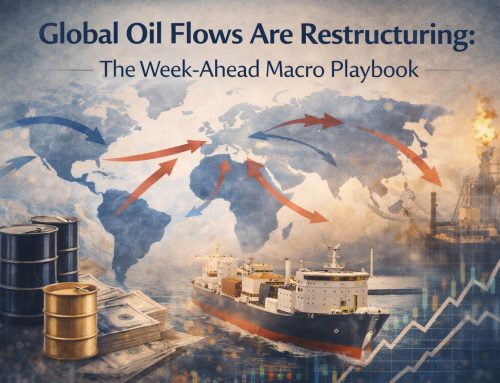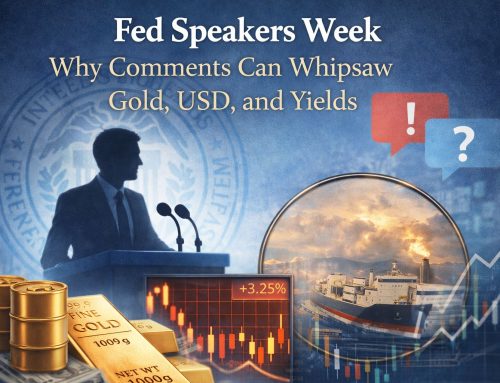
Oil is back near (and in some sessions above) $100 a barrel, and the reason isn’t complicated: markets are pricing a sustained supply risk tied to the Strait of Hormuz, attacks on Gulf shipping, and escalation rhetoric. Reuters described Brent surging more than 10% above $100 alongside global equity weakness and renewed inflation concerns.
If you’re newer to trading, this is exactly the kind of tape that creates bad habits: chasing spikes, overtrading volatility, and confusing headlines with confirmation. This post breaks the move down in institutional language—with beginner-safe rules.
The 30-second institutional read
This is a risk premium market.
Oil isn’t moving because demand changed overnight. It’s moving because the market is assigning a higher probability to prolonged disruption through a critical chokepoint, which forces refiners, shippers, and hedgers to pay up for supply certainty.
That “pay up” is the risk premium. And when it expands, it doesn’t stay in oil—it leaks into inflation expectations, bond yields, FX, and gold.
What “Hormuz disruption” actually means for price
When traders hear “Hormuz disruption,” they’re not just thinking about a map. They’re thinking about:
-
Flow risk (how much supply is delayed or blocked)
-
Timing risk (days vs weeks matters more than the headline)
-
Insurance & shipping risk (costs can jump even before barrels are lost)
Reuters’ market wrap explicitly tied the jump to attacks on Gulf shipping and warnings around keeping the Strait closed, which is exactly the kind of catalyst that makes a premium expand fast.
Why $100 matters (psychology + positioning)
$100 isn’t magic, but it’s a psychological trigger:
-
Media amplification → more attention → more retail participation
-
Risk limits → funds adjust exposures → volatility increases
-
Macro repricing → inflation fears return → yields move
So the real risk isn’t “oil touched $100.” The real risk is what happens after: the macro chain reaction.
The macro chain reaction (Oil → Inflation → Yields → USD → Gold)
When oil spikes on supply risk:
-
Inflation expectations can rise
-
Bond yields can rise
-
The USD can strengthen (safe haven + rates)
-
Gold can become choppy (safe-haven bid vs USD/yield headwind)
Reuters noted the oil surge was lifting inflation concerns and coincided with a stronger dollar and rising yields.
Beginner takeaway: War headlines don’t automatically mean gold goes up. The USD/yield filter can dominate.
The “duration trade” is now the main story
Institutions care less about “how high did it spike?” and more about “how long does it last?”
That’s why today’s forecast upgrades matter. Reuters reported Goldman Sachs raised its Q4 oil forecasts, explicitly because the firm expects a longer disruption window than previously assumed.
When banks start talking duration and scenarios, the market often transitions from:
headline volatility → sustained macro regime risk.
The confirmation checklist (what institutions watch)
Here’s the clean framework:
1) Does the market hold above breakout levels after the spike?
A real regime move usually shows acceptance (not an instant full retrace).
2) Do spreads and shipping headlines confirm ongoing stress?
In a real disruption, “secondary” signals don’t calm quickly.
3) Do yields and USD stay bid?
If they do, the oil shock is feeding macro repricing, not just oil traders trading oil.
4) Do equities keep weakening on inflation risk?
That cross-asset confirmation is a big tell.
The beginner trap (and how to avoid it)
On days like this, beginners typically lose money in two ways:
-
Chasing the top because “war = oil up forever”
-
Shorting too early because “$100 is overbought”
Institutional rule: don’t trade opinions—trade structure.
Beginner-safe rules
-
Don’t chase the first candle.
-
Wait for break + retest (or a clear rejection + failed retest if short).
-
Cut size during headline regimes (spreads/slippage are worse).
-
If you can’t define your invalidation level in one sentence, don’t enter.
Clean trade map (simple, practical)
You don’t need to predict diplomacy. You need to map price behavior.
-
Bull continuation case: above key level + retest holds → continuation
-
Mean-reversion case: spike fails + reclaim below key level → unwind
-
No-trade case: violent range, wicks everywhere, mixed USD/yield signals → step aside
Bottom line
Oil near/above $100 is not just an energy headline—it’s a macro driver. The Hormuz disruption narrative expands risk premium, and that premium quickly transmits into inflation fears, yields, FX, and gold.