When conflict headlines hit, retail traders often expect a simple equation: war = fear = gold up. So when gold pulls back during intense geopolitical tension, it feels “wrong.” It isn’t.
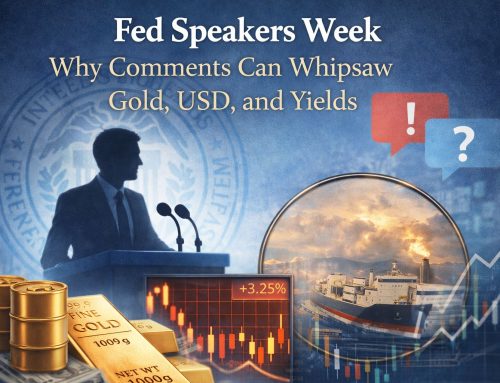
In institutional terms, gold is not only a safe haven. It is also a non-yielding asset priced through the lens of USD liquidity and real interest rates. And in the current environment, those two forces can overpower the safe-haven bid—especially when conflict is driving energy inflation fears.
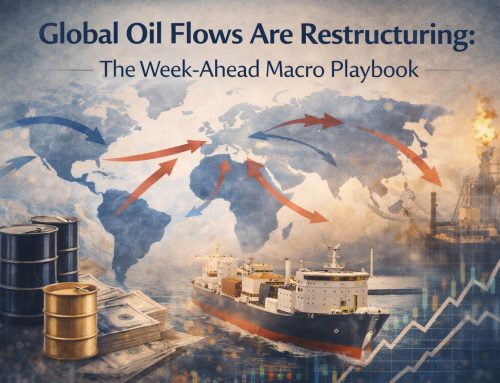
Over the past week, markets saw exactly that: oil surged, the dollar strengthened, and gold softened—despite elevated war risk.
The core idea (in one sentence)
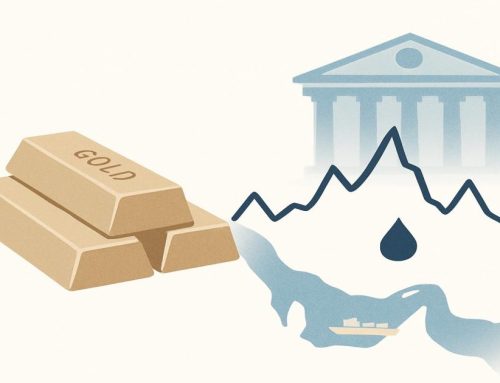
Gold can fall because of war headlines when the war drives oil higher, which pushes inflation expectations up, lifts real yields, strengthens the USD, and raises the opportunity cost of holding gold.
What actually happened (market snapshot)
Recent market coverage described:
-
Oil spiking sharply amid the conflict, reinforcing inflation concerns.
-
The US dollar strengthening on safe-haven demand and the US’s position as an energy exporter.
-
Gold moving lower even as geopolitical risk remained high.
MarketPulse noted gold was down roughly 3% on the week, following a strong multi-week run, and linked the pullback to rising real yields as oil jumped and inflation expectations repriced.
The institutional “why”: real yields are the filter
1) Gold competes with yield
Gold doesn’t pay interest. So when real yields rise (inflation-adjusted returns on bonds), gold becomes less attractive at the margin. That’s not a theory—it’s the daily pricing engine of macro funds.
In this episode, reporting explicitly tied gold’s weakness to firmer US yields and a stronger dollar, both supported by concerns that the conflict could keep inflation pressures elevated through energy.
2) Oil shocks can be anti-gold in the short run
This is the part that confuses beginners:
-
Oil up can mean inflation up
-
Inflation fears can mean rates higher for longer
-
That can mean real yields up (or at least “less dovish”)
-
And that can mean gold down, even if fear is real
Reuters described this tug-of-war directly: rising yields and a firmer dollar pressured gold as inflation concerns grew.
3) The dollar can become the “first” safe haven
In fast geopolitical repricing, institutions often seek the cleanest liquidity: USD cash and short-term USD exposure. Reuters reporting this week described a broad USD surge amid conflict-driven risk aversion and oil above $100.
When the dollar is ripping higher, it can mechanically pressure gold (gold is priced in USD).
The retail trap (and why it repeats)
Here’s the common retail sequence:
-
A war headline hits
-
Gold spikes for minutes/hours
-
Retail buys the “safe haven candle”
-
USD/yields reprice after oil surges
-
Gold reverses → stop-outs → frustration
Institutions rarely buy the first candle. They wait for the macro filter to confirm.
The “macro filter” checklist (beginner-friendly)
Before you press buy/sell on gold during a geopolitical shock, check these three:
✅ Filter A: Is the USD strengthening persistently?
If USD is trending strongly higher, gold rallies are often fragile.
✅ Filter B: Are Treasury yields (especially real yields) rising?
If real yields are lifting, gold’s upside is capped more often than not.
✅ Filter C: Is oil surging and fueling inflation fear?
If oil is spiking, markets can price “sticky inflation,” which can reduce rate-cut bets and pressure gold.
If two of the three are “YES,” then gold is at high risk of whipsaw.
How institutions trade this (a clean playbook)
Playbook 1: Don’t chase the headline candle
If you missed the first move, it’s fine. Wait for the market to show direction after liquidity returns.
Playbook 2: Trade only after confirmation
Institutions want:
-
Break + retest + hold (acceptance)
or -
Sweep + reclaim + hold (stop-hunt then real move)
Playbook 3: Reduce size during headline regimes
Volatility expands, spreads widen, and reversals are violent. That’s not when you “go bigger.”
What this means for XAUUSD traders (CRT-SEM style risk rule)
If you want a firm rule for beginners:
NO — do not enter when gold is in mid-range chop during headline volatility and the USD/yields filter is against you.
Wait for a level-based confirmation (break+retest or sweep+reclaim) and only trade when the macro filter is not contradicting your direction.
Bottom line
Gold didn’t “fail.” The market simply priced the second-order effect of the conflict: energy inflation risk → yields/dollar → opportunity cost.
If you want to stop getting trapped on these days, shift from “headline trading” to “filter trading”:
-
USD direction
-
real yields
-
oil/inflation impulse
Then execute only after price confirmation, not emotion.
FAQ
Q: Why can gold fall during war?
Because war can push oil higher and lift inflation fears, which can raise yields and strengthen the dollar—both of which can pressure gold.
Q: What should beginners do on headline days?
Avoid chasing the first candle. Wait for break+retest or sweep+reclaim confirmation and trade smaller.