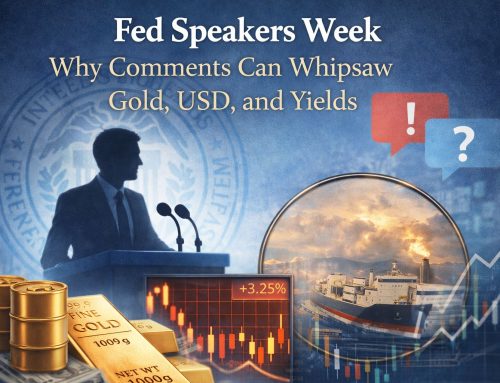
The market is no longer trading “oil price” as a single number. It’s trading a reordering of physical supply routes—who gets barrels, who pays up for shipping/security, and where shortages appear first. That matters because flow restructuring is what turns an oil spike into a broader macro regime: inflation risk, higher yields, and delayed rate cuts.
What changed
Week-ahead market framing has shifted from “headline spikes” to structural dislocation. A sustained conflict-driven risk premium around Hormuz forces buyers to compete for alternative supply and forces sellers to choose destinations based on price, payment risk, insurance, and shipping availability. Investors.com explicitly frames the current environment as a “restructuring of global oil,” not a one-off jump.
The institutional framework: spot price is the headline; spreads are the signal
Beginners tend to focus on “Brent above $100.” Institutions focus on:
- Time spreads (tightness signal)
If near-term barrels become scarce, the front of the curve tends to carry more premium relative to later months. That’s a market way of saying: “supply is tight right now, not just later.” - Regional differentials (who is bidding)
When flows reroute, different regions can “outbid” each other based on refinery needs and strategic stockpiling. That changes pricing power across Asia/Europe and pushes volatility into shipping routes. - Refined products (real-world stress)
When crude is disrupted, the downstream system can feel it fast—diesel, jet, and gasoline spreads often reveal where the stress is most acute.
The macro transmission chain (why XAUUSD traders should care)
When oil flow stress persists, markets start pricing second-order effects:
- Oil disruption → inflation risk rises
- Inflation risk → yields rise / rate cuts get pushed out
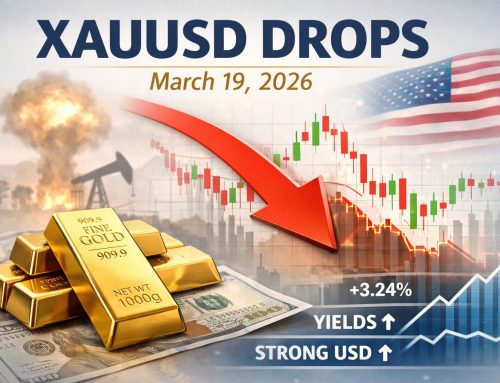
- Yields + USD strength → gold can whipsaw or drop despite “risk-off”
- Risk assets → volatility increases
The key lesson: in an “inflation shock” tape, USD and yields can become the dominant filter for gold—even when geopolitics would normally support it.
What to watch next week (simple checklist)
- Oil curve behavior: does the front-end stay bid after headline spikes?
- Shipping/disruption headlines: do they persist, or do they fade quickly?
- Rates reaction: do yields drift higher on “energy inflation” talk?
- Equity tape: does the market start pricing “stagflation risk”?
Beginner rules (to avoid getting chopped)
- Don’t trade “$100” as a level by itself. Trade confirmation (break + retest + hold).
- On headline days, assume spreads/slippage are worse. Reduce size.
- If USD and yields are moving against your gold thesis, treat gold longs as higher risk.
Conclusion
The week ahead is less about guessing where oil closes and more about confirming whether the market is pricing a durable rerouting of global supply. When flows restructure, volatility becomes systemic—showing up in inflation expectations, yields, USD, and gold.
Sources: Investors.com week-ahead framing; broader market context via WSJ/Barron’s (linked in your source list).